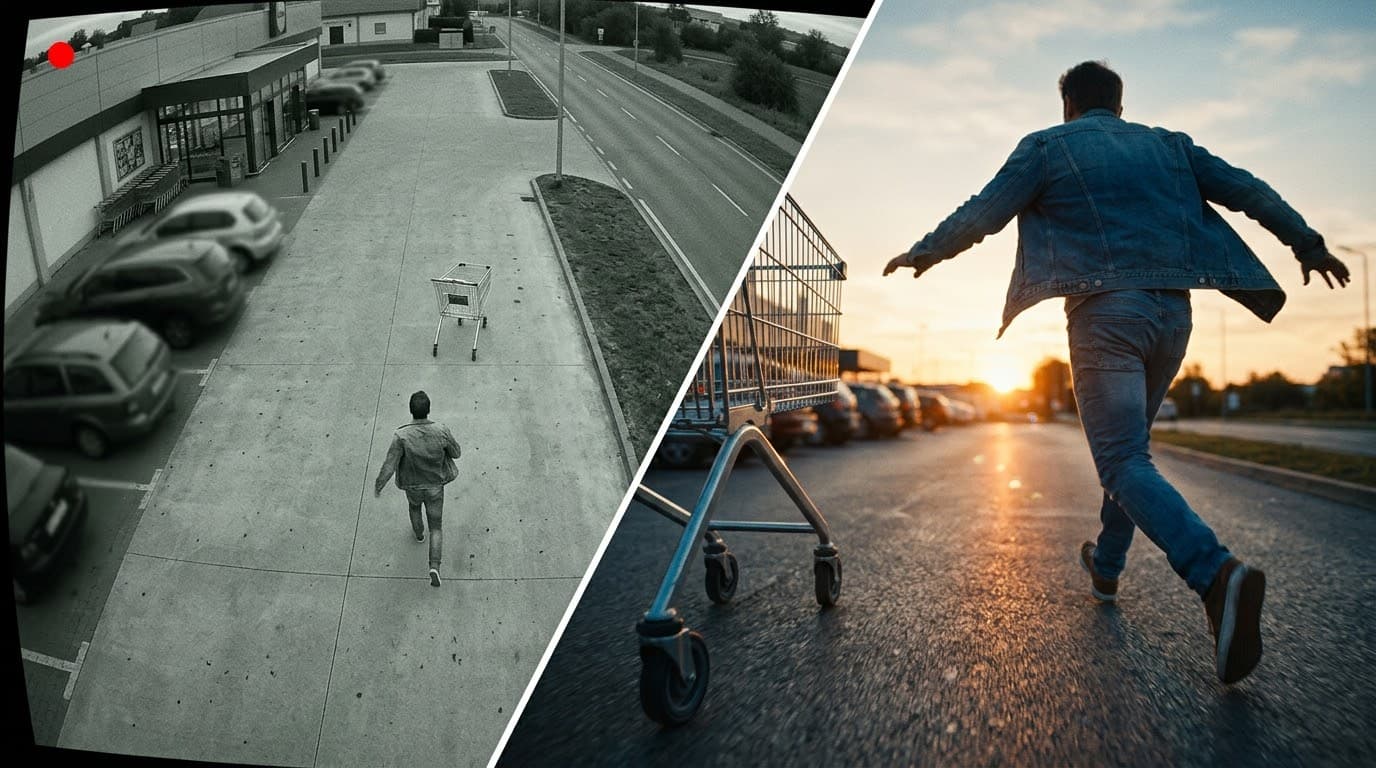
En esta página
De dónde sale este vídeo
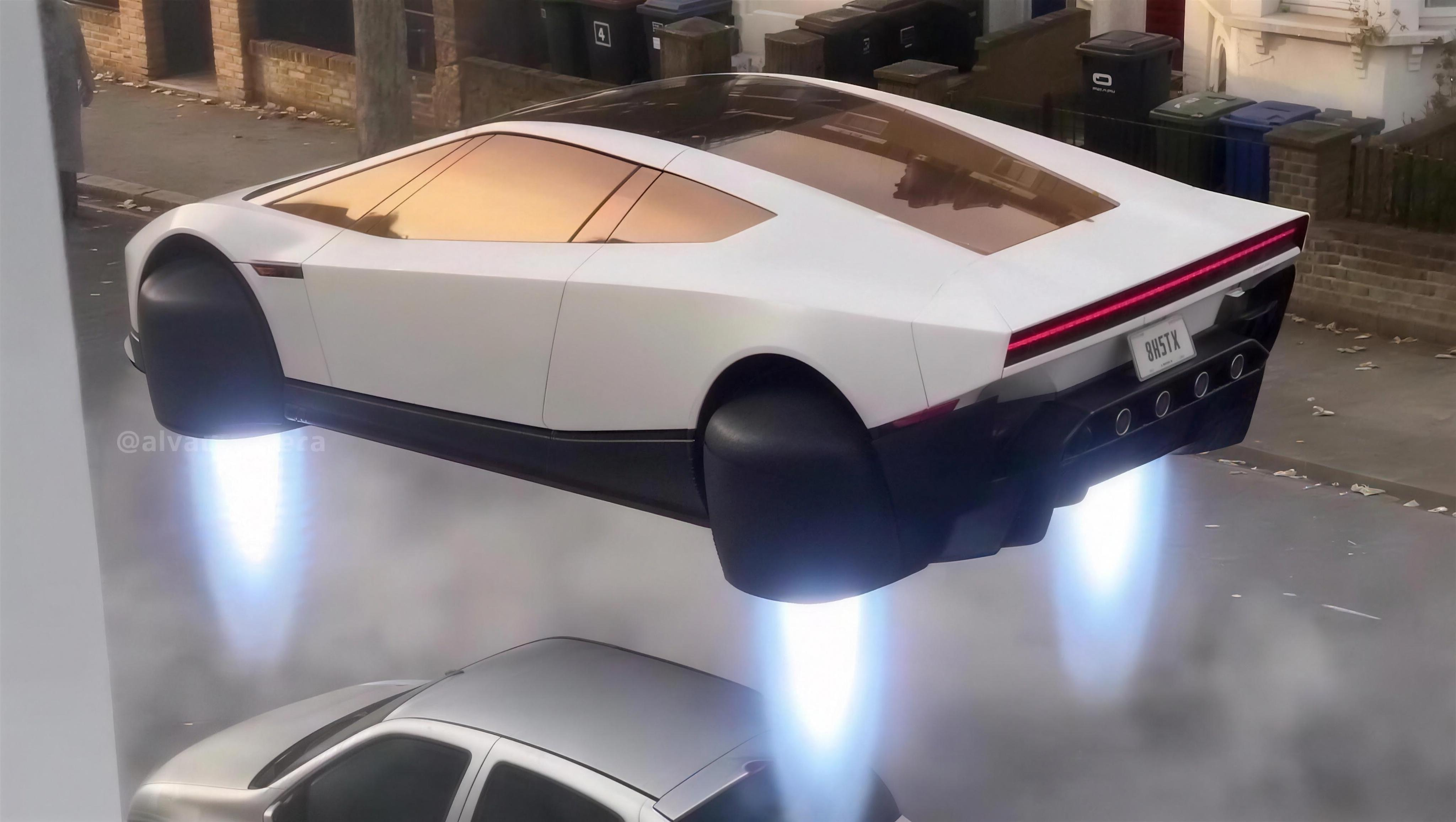
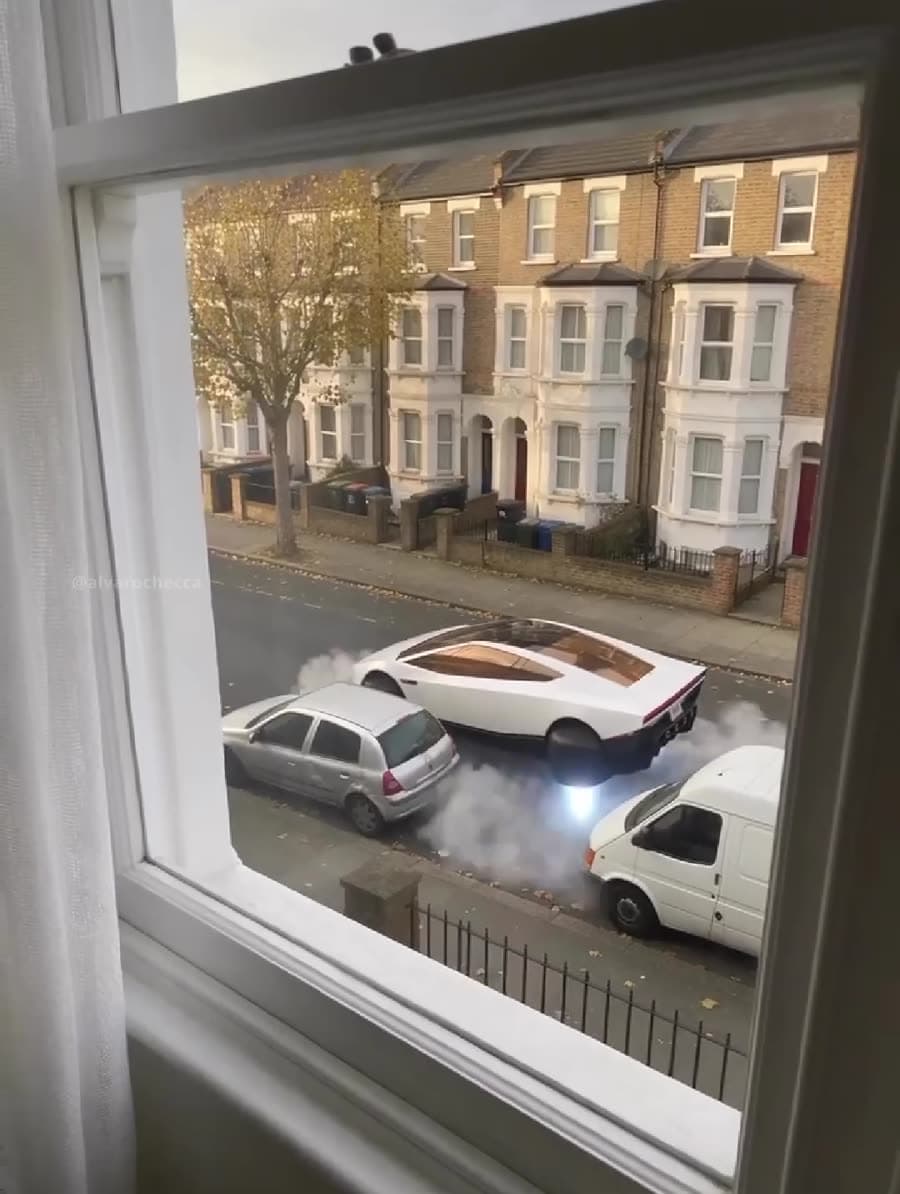
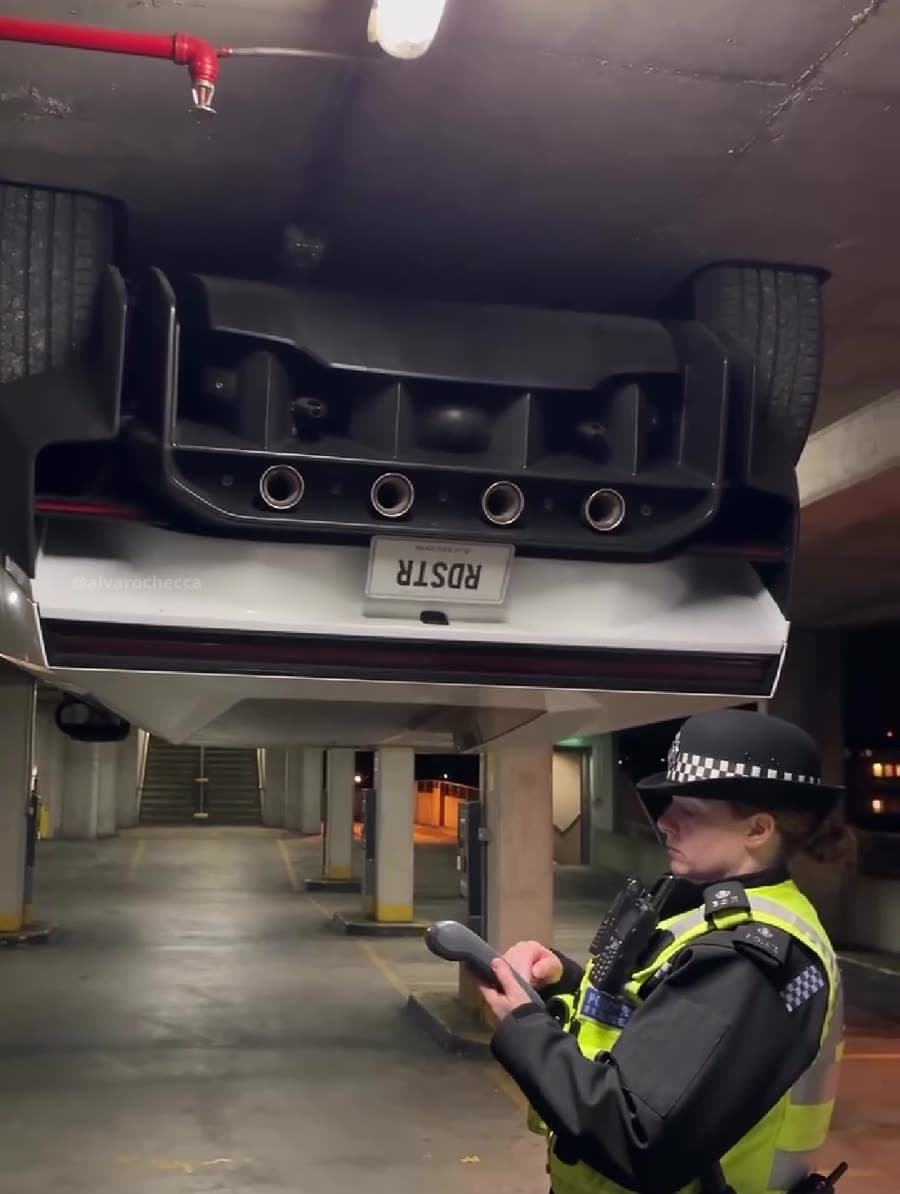
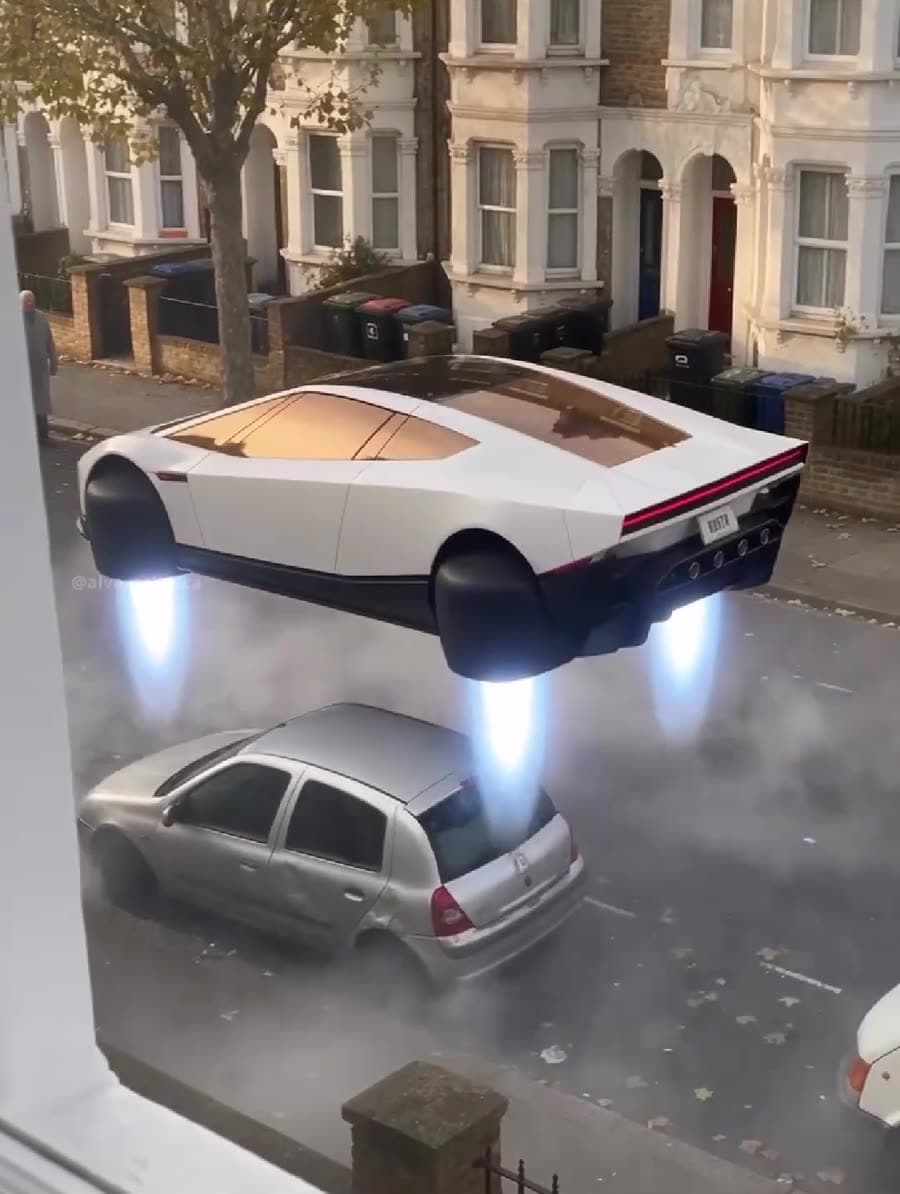
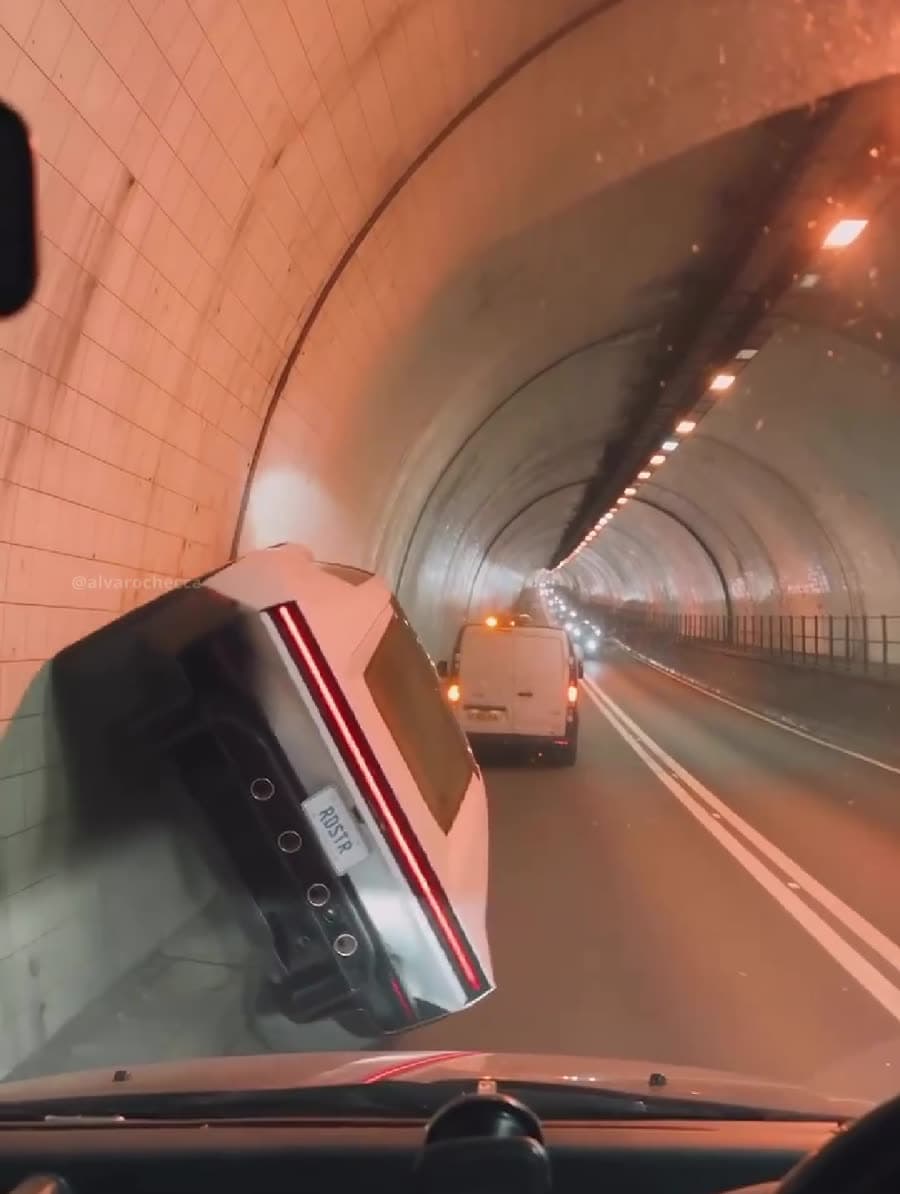
Tesla presentó su nuevo Roadster subiendo por una pared y saltando por encima de otros coches. El creador Waviboy se lo llevó a Londres con IA e hizo que pareciera grabado con el móvil por gente normal: en un túnel, desde una ventana y en un aparcamiento.
El método y los prompts de esta guía son suyos. Puedes ver su artículo original, en inglés, en waviboy.com. Aquí te lo explicamos en español, paso a paso.
Está hecho en Higgsfield con GPT Image 2.5, Seedream 5.0 Pro y Seedance 2.5. Es una pieza de ficción: ni Waviboy ni Hub Media tienen relación con Tesla.
La idea
Cada plano es una sola generación de Seedance 2.5 con dos imágenes adjuntas: una ficha del coche y una foto del lugar sin el coche. El prompt hace el resto.
Lo difícil no es que el coche aparezca, sino que se mueva como el de verdad. Por eso casi todo el trabajo está en describir bien el movimiento.
1. La ficha del coche
Primero, fija cómo es el coche
Es un coche nuevo, así que ningún modelo sabe cómo es. Waviboy le dio a GPT Image 2.5 tres fotos de prensa de Tesla y le pidió tres fotos realistas del coche aparcado: de frente en diagonal, de lado y de atrás en diagonal.
- Tres vistas, no seis: con más ángulos el modelo se lía.
- Nada de estudio gris: una ficha con fondo de estudio hace que el coche parezca un render en todos los planos. Mejor una pared de hormigón con luz de día nublado.
Three real photographs of the same car from the reference images, placed side by side in one wide image with thin white gaps between them: left, front three-quarter view; middle, side profile facing left; right, rear three-quarter view. It is exactly the car in the references: a low two-door wedge coupe, satin white upper body with crisp angular facets, black lower body and a black sill sweeping up from the front wheel to the rear, a long bronze-tinted glass canopy, a thin white front light bar with small corner headlights, one thin full-width red rear light bar, a small white rear plate reading RDSTR, a black rear panel with four round nozzles, black angular wheels with bronze accents. Photographed for real, not rendered: parked on a plain pale concrete floor in front of a plain pale grey concrete wall, soft overcast daylight from above, soft natural contact shadows, the grey sky reflected dully in the paint, a little road dust on the tyres and lower sills, true colours, shot on a full-frame camera with a 50mm lens, natural depth of field, slight grain. The same light, floor and camera distance in all three photos. No people, no text, no labels, no logos except the RDSTR plate.
Versión para GPT Image 2.5
Prompt de Waviboy, sin cambios. Úsalo en inglés.
2. Londres vacío
Los lugares, sin el coche
Cada localización es una foto del sitio sin nadie y sin el coche, hecha con Seedream 5.0 Pro. Si metes el coche en la foto del lugar, luego deja de moverse como un coche.
Escríbela como una foto de iPhone sin editar: el objetivo, el ruido, el horizonte un poco torcido y la luz gris. Y cuida el tráfico: en el Reino Unido se conduce por la izquierda.
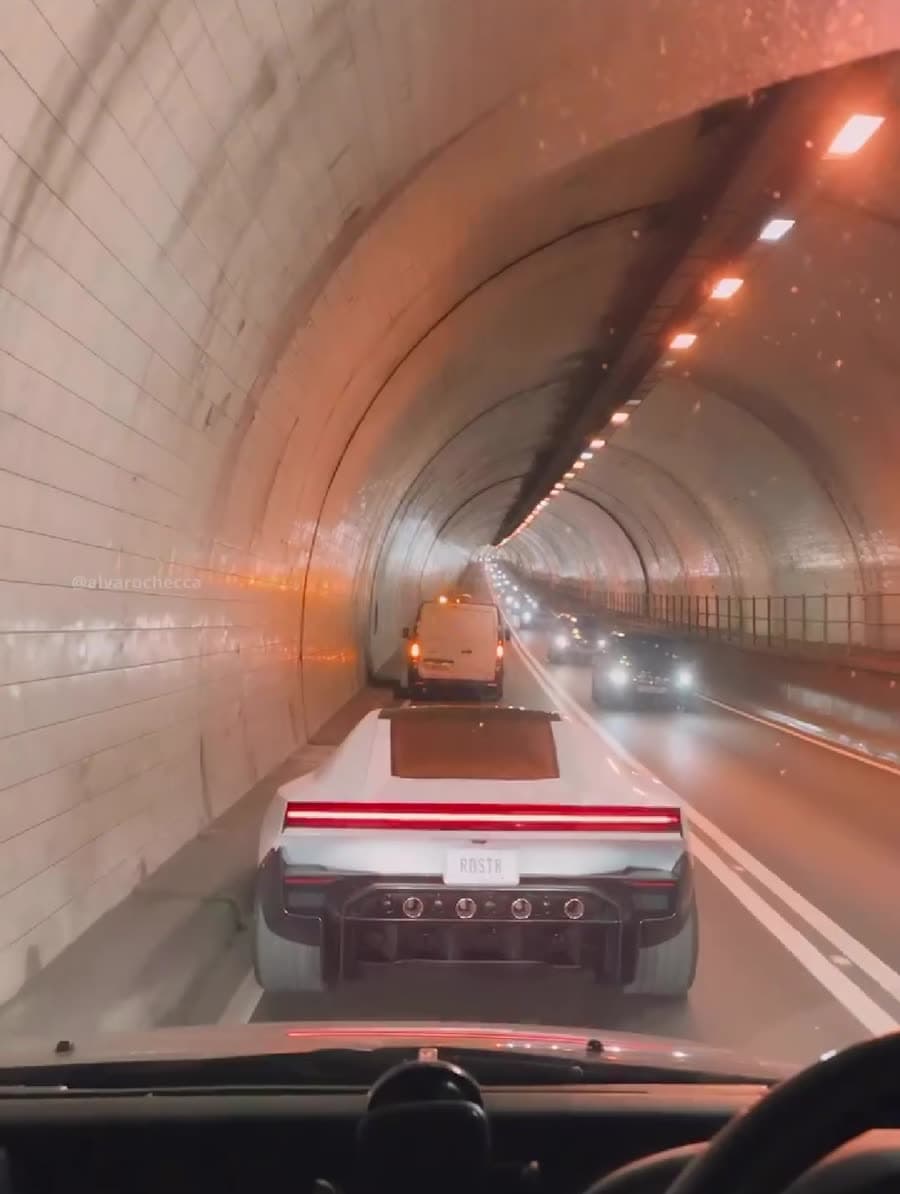
- Dale un motivo: mete el problema en la foto. En el túnel hay una furgoneta averiada y coches que vienen de frente, así que nadie puede adelantarla.
- Deja hueco: que no haya barandilla en el lado por el que sube el coche y que quede espacio libre por donde tiene que pasar.
An unedited vertical iPhone photo taken from the front passenger seat (left side) of a right-hand-drive UK car stopped in the old two-lane road tunnel under the Thames in London, looking forward through the dusty windscreen down a straight section. UK traffic drives on the left: our lane is the left lane. Directly ahead in our lane there is an empty gap of about one car length, then a broken-down white panel van stopped dead with its hazard lights flashing orange, about three car lengths from us. Beyond the van our lane is completely empty and clearly visible for a long way down the straight tunnel. The right-hand lane carries a steady stream of oncoming headlights, so nobody can pull out around the van. On the LEFT the curved tiled wall comes straight down to a low concrete kerb beside our lane: no walkway, no railing on the left, just off-white glazed tiles stained grey with grime curving up into the ceiling. On the right, beyond the oncoming lane, a narrow raised walkway with a metal railing. A strip of warm orange lights along the top of the ceiling. The dashboard edge and a phone mount at the bottom, the edge of the steering wheel at the bottom right. No people visible. Real phone camera: warm orange cast, sensor noise, slight blur, JPEG compression. No text, no logos, no readable signs.
Versión para Seedream 5.0 Pro
Prompt de Waviboy, sin cambios. Úsalo en inglés.
3. Copia el coche real
Pide solo lo que el coche hace de verdad
Las primeras pruebas salieron mal: Waviboy describía cómo funciona el coche y Seedance se lo inventaba (cohetes, despegues a toda velocidad, aparcado del revés). La solución fue ver el vídeo de Tesla fotograma a fotograma y pedir solo los movimientos que hace el coche real, a su velocidad.
- Succión: unos ventiladores en el suelo lo pegan a cualquier superficie. Las ruedas siempre la tocan y el techo siempre apunta hacia fuera. Sube una pared curva despacio, en unos cinco segundos.
- Propulsores: cuatro chorros finos y brillantes que disparan hacia abajo. Sube recto, se queda flotando y baja despacio, con niebla donde tocan el suelo.
- Un movimiento por plano: cada vez que le pedía aterrizar en un punto exacto, se quedaba corto. Por eso en el túnel nunca aterriza: pasa por encima de la furgoneta y sigue.
- Reacciones: la gente reacciona tarde y habla con quien tiene al lado. El padre lleva veinte minutos atascado, así que no dice «guau», dice «you're having a laugh» («me estás tomando el pelo»).
4. El prompt del túnel
Movimiento, segundo a segundo y diálogo
Este es el prompt completo del plano del túnel, con solo dos imágenes adjuntas: la ficha del coche y el túnel vacío. Primero explica una vez cómo se mueve el coche, luego qué pasa segundo a segundo y, al final, quién va en el coche y qué diría de verdad.
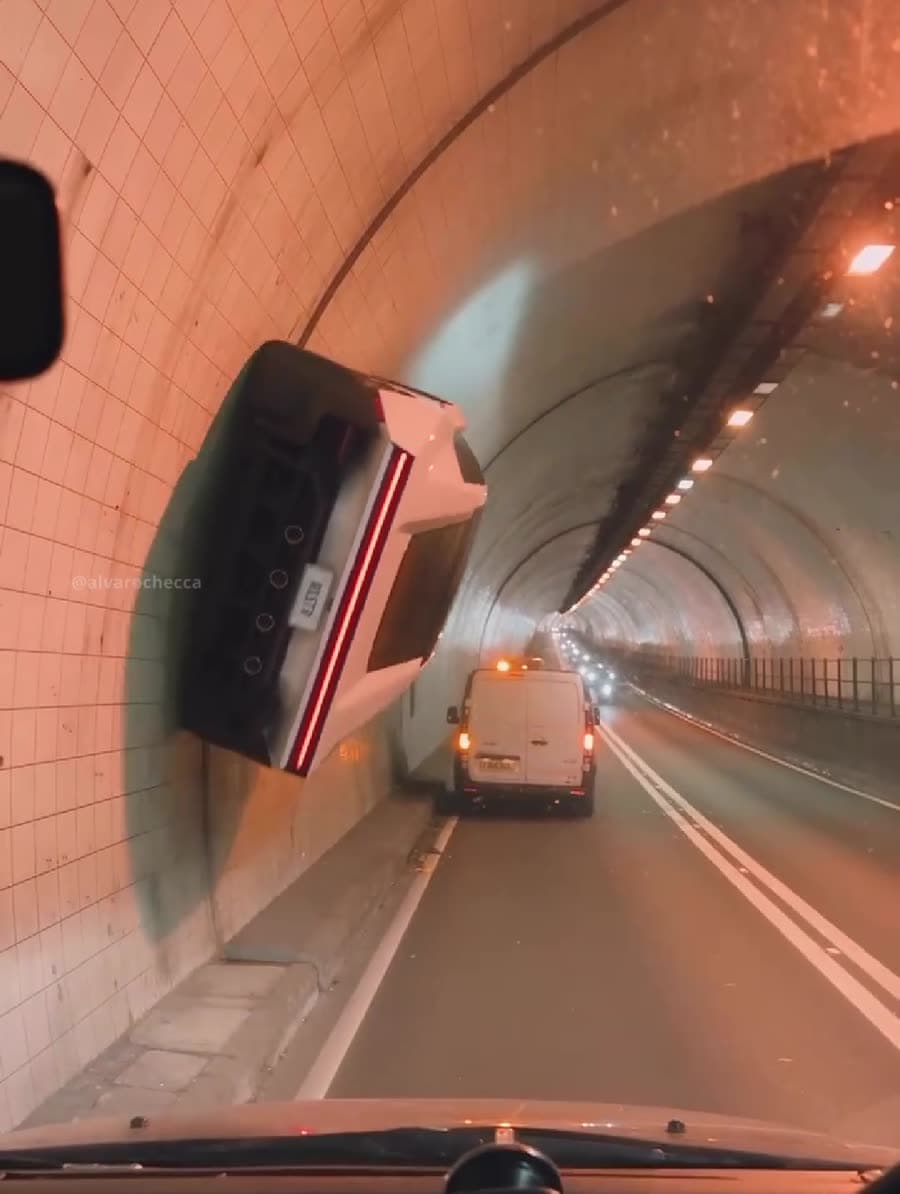
Vertical iPhone video, real handheld footage filmed by a young woman in the front passenger seat of her dad's right-hand-drive car, stopped in the old tiled road tunnel under the Thames behind a broken-down van, through the dusty windscreen, dashboard edge at the bottom. Not cinematic: road vibration, orange sodium light, noisy shadows, autofocus hunting, heavy phone compression.

Image 1 is the car, exactly as in the photos: a low white wedge coupe, black lower body, bronze-tinted glass, one full-width red rear light bar, four round rear nozzles, plate RDSTR. Same shape and size in every frame, lit orange by the tunnel lights, grime on its sills. Image 2 is the location: this tunnel, the broken-down white van with its hazards on a few car lengths ahead in our lane, oncoming headlights in the right lane so nobody can get round it, the curved tiled wall on our left coming down to a low kerb with no railing.

How this car moves: fans in its floor suck it onto any surface, so it can drive up a curved wall and along a ceiling upside down, tyres always touching the surface and roof always pointing away from it. It moves slowly and steadily, like a car crawling in traffic. It never leaves the surface and there are no jets.

0-2s: the white car is stopped straight in our lane right in front of us, its rear and RDSTR plate facing us. The van is ahead of it.

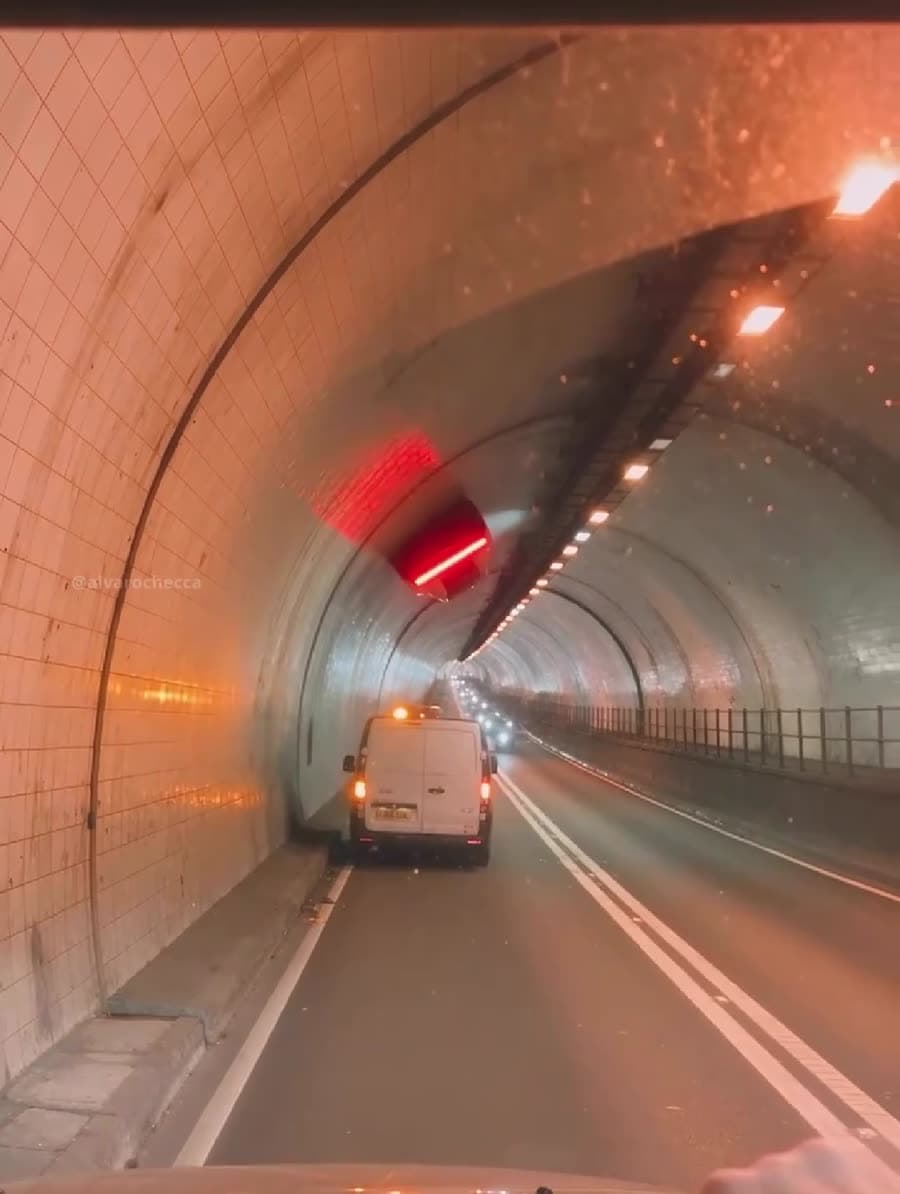
2-5s: it steers left onto the curved tiled wall and climbs it slowly, following the curve round until it is upside down on the ceiling.

5-10s: upside down, tyres on the tiles, it drives steadily away from us along the ceiling, passes over the top of the van and carries on down the tunnel until it is small in the distance, its red light bar glowing. Below it the van and the jam stay exactly where they are.

The filmer's breath catches as it climbs. Once it has passed over the van, her dad, a London man in his fifties in the driver's seat on the right, only his hand on the wheel at the bottom right of frame, flat and deadpan: you're having a laugh. She laughs, breathy, close to the mic. Natural, not acted.

Sound, as an iPhone mic records it inside a car in a tunnel: engines idling, the van's hazards ticking, the rising howl of its fans echoing off the tiles, its tyres rumbling on the ceiling and fading away. No music.
Versión para Seedance 2.5
Prompt de Waviboy, sin cambios. Úsalo en inglés.
5. Boca abajo, como debe ser
La frase para cuando el coche está en el techo
Todas las plazas están ocupadas, así que aparca en el techo y le ponen una multa. Seedance se empeñaba en ponerlo al derecho, con el techo pegado arriba. Lo que funcionó fue describir lo que verías de verdad desde el suelo: el lateral del coche al revés, las ruedas arriba contra el hormigón, los cristales colgando a la altura de la cabeza y la matrícula leída del revés.
Pega esta frase en cualquier prompt de Seedance en el que el coche esté boca abajo.
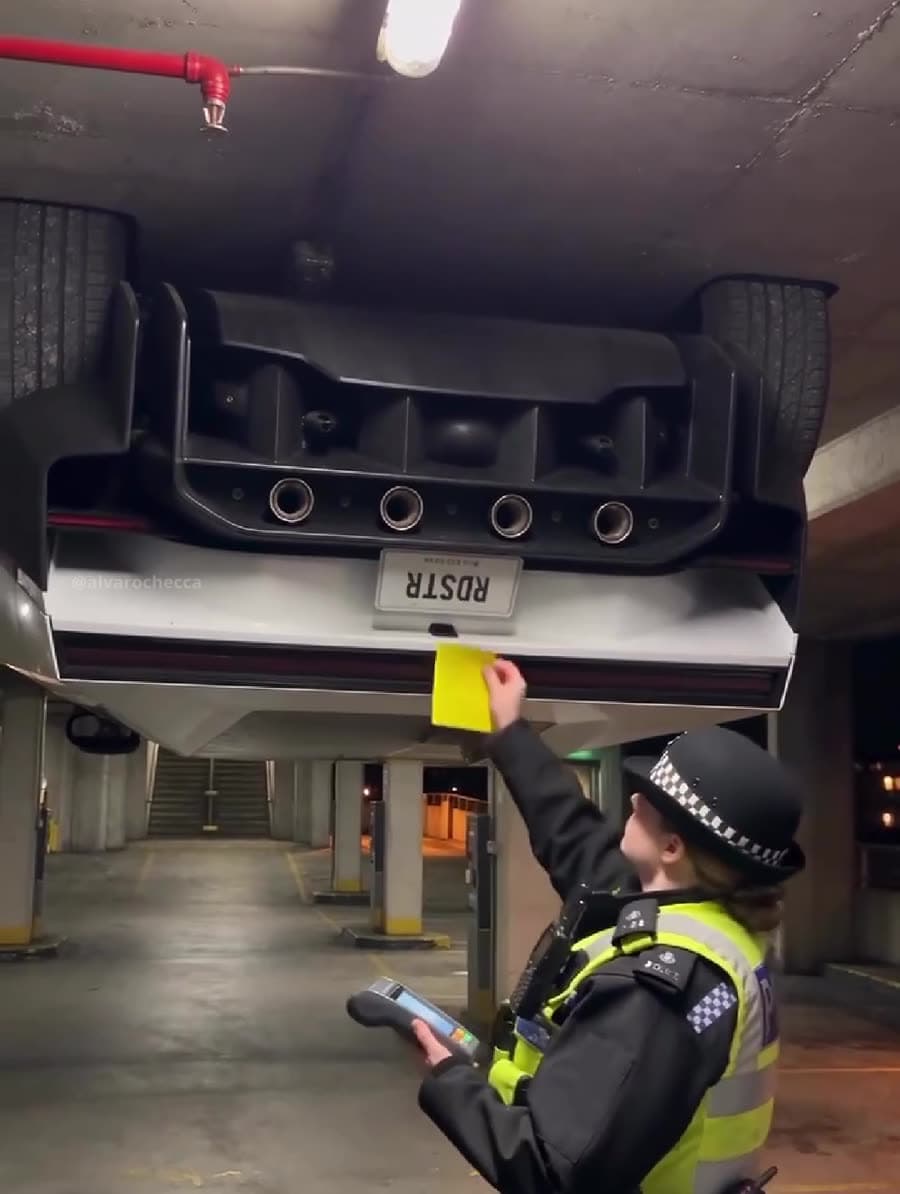
It is completely UPSIDE DOWN: we see its whole side profile turned upside down, its four tyres at the top pressed flat against the concrete ceiling, its black lower body and sill near the ceiling, and its white roof and bronze-tinted glass at the bottom, hanging down toward the floor at head height. Nose to the left. Its RDSTR plate, when seen, reads upside down. It looks exactly like a normal parked car photographed with the picture turned upside down. It does not move at all.
Versión para Seedance 2.5
Prompt de Waviboy, sin cambios. Úsalo en inglés.
6. El acabado
Que siga pareciendo un móvil
- Haz borradoresGenera de dos a cuatro versiones en 480p, quédate con la mejor y solo esa hazla en 1080p.
- Súbelo a 4KUsa Topaz en Higgsfield: 2160p y formato 9:16.
- Dale texturaUn poco de nitidez y un grano fino después de subir la resolución. Nada más: no lo colorees bonito.
- Respeta el sonidoQuédate con el sonido que te da Seedance. El ruido de micro de cada clip es lo que hace que parezca grabado.
Pruébalo en Higgsfield
Enlace de afiliado: si te registras desde aquí, Hub Media puede recibir una comisión sin coste extra para ti.
Preguntas frecuentes
¿Por qué los prompts están en inglés?
Los modelos de imagen y vídeo responden mejor en inglés. Puedes pedirle a una IA que te los traduzca para entenderlos, pero úsalos tal cual.
¿Puedo hacerlo con otro coche u otra ciudad?
Sí. Cambia la descripción del coche en la ficha y la de los lugares, y mantén la estructura: ficha del coche, lugar vacío y un prompt con el movimiento y los tiempos.
¿Cuánto cuesta?
Higgsfield funciona con créditos y cada generación gasta más o menos según el modelo, la duración y la resolución. Para gastar menos, haz los borradores en 480p y deja la calidad alta para la versión final.
¿Por qué parece grabado con un móvil?
Porque los prompts lo piden: foto de iPhone sin editar, ruido, enfoque que duda, compresión del móvil, sonido del micro y reacciones naturales. Si lo haces bonito, deja de parecer real.
¿Puedo publicar el resultado?
Sí, pero márcalo como contenido hecho con IA y no lo presentes como real. Tampoco des a entender que tienes relación con Tesla.
Fuentes e inspiración
¿Te ha funcionado?
Creador de la red Hub Media. Prueba cada prompt en varios modelos antes de publicarlo.
Un recurso nuevo cada semana
Te llega al correo antes que a Instagram. Sin spam.